Out of My Mind

Sharon M. Draper’s Out of My Mind (2010) follows Melody Brooks, an eleven-year-old whose cerebral palsy leaves her unable to speak, not unable to think. Through Melody’s first-person account, the novel asks what it takes to be heard. This companion offers evidence-led readings and scene locators; use your edition to add page numbers.
Explore the StoryAbout This Book
Facts about the book
Reading level: recommended for ages 10–14 and grades 5–8 [5]
Form: a contemporary middle-grade novel told in the first person, which is also a frame story — the book you are reading is the autobiography Melody is assigned to write [5]
Reception: the publisher's catalog [7] and the author's biography [4] identify it as a New York Times bestseller. Their duration claims differ, so no length of time is asserted here.
Book awards: Bank Street College Josette Frank Award (2011); Buckeye Children's and Teen Book Award for Grades 6–8, Ohio (2011); CCBC Choice (2011); NCTE Notable Children's Book in the Language Arts; Young Hoosier Book Award, Middle Grade (2013) [5]
Adaptation: a film based on the novel premiered in 2024 and is available on Disney+ [5]
How to Use This Page With Your Pamphlet
Use the links to find the matching analysis for each pamphlet field; add your own evidence and page numbers from the book. [8]
- Name
- Your name
- Title
- Out of My Mind
- Author
- Sharon M. Draper
- Author Information
- Author — selected facts about Draper's life and work.
- Contextual Information
- Context — how genre, history and culture show up in the book.
- Unforgettable Moments
- Plot — exposition, rising action, climax, falling action and resolution.
- Important Characters
- Characters — a key scene and four qualities each, ordered mental, moral, physical, social.
- Close Reading Vocabulary
- Vocabulary — words from the novel plus the tested resource words, each with a scene locator.
- Valuable Details: Setting
- Setting — the four elements from the handout, with descriptions that show rather than tell.
- Valuable Details: Narrator
- Point of View — the narrator, four bolded narration terms, and evidence for each.
- Valuable Details: Attitude
- Tone — one emotional scene described with an attitude word (the author's side).
- Emotional Sparks
- Tone — three excerpts, mood words, and a sample reaction you should rewrite in your own voice.
- Theme & Big Ideas
- Theme — the big ideas, and a finished theme statement built on the handout's template.
- Questions
- Questions — discussion questions with possible readings.
Author Information

Sharon Mills Draper
The pamphlet asks for the 5Ws of the author's life. Here they are, each tied to a source you can check.
What: an author of books for children and young adults, including Copper Sun , Romiette and Julio and the Out of My Mind series. [3]
When: she taught in Cincinnati public schools and was named National Teacher of the Year in 1997. [3]
Where: Draper is associated with Cincinnati, Ohio, where she taught. [4]
Why it matters: her years as a teacher provide context for a novel about a student whose abilities are repeatedly underestimated. [2]
Education
In the text: Source — reference works record a bachelor's degree in English from Pepperdine University and a Master of Arts in English from Miami University of Ohio , earned in 1974. [3] Her own biography adds an honorary Doctor of Laws from Pepperdine University in 2009. [4]
Her biography also lists a Dean's Award from Howard University School of Education ; it is an honor, separate from her degrees. [4]
Honours
- Two Coretta Scott King Awards — Forged by Fire (1997) and Copper Sun (2007) — plus two Coretta Scott King Author Honors, The Battle of Jericho (2004) and November Blues (2008), and the inaugural John Steptoe Award for New Talent for Tears of a Tiger (1995). [3]
- Her own biography describes her as a "five-time winner of the Coretta Scott King Literary Awards," a count that includes the two Honors and the Steptoe award. [4]
- Milken Family Foundation National Educator Award (1997), YWCA Career Woman of Achievement, Dean's Award from Howard University School of Education, Pepperdine University Distinguished Alumnus Award, Marva Collins Education Excellence Award, and the Governor's Educational Leadership Award. [4]
- The American Library Association's Margaret A. Edwards Award for lifetime literary achievement (2015). [3]
How she started writing
In the text: Source — in 1990, while teaching, a ninth-grade student challenged her to write something. She entered a short story, "One Small Torch," in a contest run by Ebony magazine, won $5,000 and publication, and received a letter of congratulation from Roots author Alex Haley. She has said that letter is what made her decide she could be a writer. [3]
The Out of My Mind books came later: Out of My Mind (2010), Out of My Heart (2021) and Out of My Dreams (2024). [3]
Contextual Information


The pamphlet asks how the genre, history or culture of a book's time is reflected in it. These are possible points of connection.
Genre
The novel is contemporary realistic fiction narrated in the first person. Its ending reveals that Melody is writing an autobiography for a class assignment, creating a frame for her account. [5] [2]
History
Published in 2010, the novel depicts a contemporary school and an assistive communication device that substantially expands what Melody can say. [6] The story does not specify a calendar year for its events.
Culture
- Segregation next to inclusion. Melody spends her days in room H-5, where the alphabet is the ceiling, before she is allowed into the fifth-grade rooms — and when she gets there, the work she is handed starts at the same place. [5]
- Assistive technology and access. The Medi-Talker lets Melody communicate in a wider range of words; the car scene shows the limits of communication when she cannot use it.
- Assumptions about intelligence. Two classmates, Molly and Claire, bully Melody on the explicit assumption that a body which cannot speak must also be a mind which cannot think. [5] Interpretation: the novel treats this assumption, not the bullying, as the injury — the bullying is what the assumption looks like when it reaches a school corridor.
- Who gets believed. Melody's family advocates for her, while classmates and some school staff underestimate her. These interactions shape her opportunities.
- Representation. The novel was written at a time when main-character stories about disabled children were scarce, and it is widely used in classrooms to prompt exactly the conversation its plot forces. [5]
A caution about one word
The novel focuses on Melody's relationships, education and communication, not on presenting her as a tragedy. Distinguish her physical disability from assumptions other characters make about her intelligence.
Characters
Melody Brooks
Protagonist • Age 11 • Fifth gradeMelody has cerebral palsy, uses a wheelchair and cannot speak. She describes an unusually strong memory and a rich inner life, though other people often mistake her limited speech for limited understanding.
Mental
Analytical : she sorts, compares and connects. She notices that her class is taught the alphabet over and over, and she can tell the difference between a teacher who has not understood her and a teacher who has decided not to.
Moral
Honest : she never pretends to be less than she is, even when pretending would be easier and safer — and she is honest about her own jealousy of her sister as well as about her anger at being doubted.
Physical
Youthful : she is eleven years old. For physical description, use details from the novel rather than treating disability as a personality trait.
Social
Empowering : her determination to communicate and participate challenges other people's low expectations.
Key scene: in the family car, Melody sees Penny behind the van and tries to alert her mother. Locator: the car scene after the airport; record the page in your edition.
Mrs. Violet Valencia ("Mrs. V")
Neighbour • Retired special education teacherMelody's next-door neighbour and the first adult to treat what Melody says as meaning. A retired special education teacher, she teaches Melody to roll over and then to crawl, builds her a board to point at, and tells her plainly that she is being wasted.
Mental
Ingenious : she solves problems other adults have stopped trying to solve. She lays Melody on a quilt, puts a toy just out of reach, turns on music and waits — inventing a way to teach rolling that nobody has thought to try.
Moral
Dependable : she turns up, she stays, and she says the difficult thing out loud. Her method is to state the truth and then wait for the child to reach it.
Physical
Energetic : she kneels on the floor, lifts, repositions and keeps going. The handout's Physical bank is mostly about looks, and Mrs. V is described by what her body does rather than how it looks.
Social
Cordial : courteous, patient and gracious — and, more to the point, Inclusive in the only sense that matters in this novel: she treats Melody as a person who is present.
Key scene: Mrs. V puts Melody on a quilt on the floor, ignores the crying, plays marching-band music, and tells her she can turn herself over. Locator: the early chapters, the first physical progress Melody makes; search your copy for the line about turning over and rolling.
Diane Brooks
Mother • Primary caregiver and advocateMelody's mother advocates for her at school and helps her communicate. The car scene shows a painful moment when she misunderstands Melody's urgent attempts to warn her.
Mental
Creative : she treats communication as a problem to be solved rather than a wall. The request for the Medi-Talker, and the years of homemade systems before it, are her work.
Moral
Loyal : she advocates for Melody and works with her family to support her communication.
Physical
Sturdy : she lifts, carries, turns, feeds and transfers her daughter every single day. Here the physical word describes the work her body does — not her appearance, and not her worth.
Social
Assertive : she speaks up in front of teachers and administrators when nobody else will, and she is the reason Melody gets into mainstream classes at all.
Key scene: during the storm, Diane mistakes Melody's urgent movements for a tantrum and starts the car; Penny is behind the vehicle. Locator: the car scene; record the page in your edition.
Rose Spencer
Classmate • Melody's closest friendRose is Melody's classmate and friend. Their relationship is tested when the quiz team travels without Melody after a flight disruption.
Mental
Astute : she reads a room quickly and correctly. She understands the quiz team, and she understands that the team will not hold the door open for the girl it left behind.
Moral
Inconsiderate : the team leaves without ensuring Melody knows the plan, hurting their friendship.
Physical
Youthful : Rose is a child of the same school community as Melody; choose a more specific physical descriptor only if your edition supports it.
Social
Aloof : when the pressure arrives, she keeps her distance. Distance is the social equivalent of the book's central problem — being in the room and not being counted in it.
Key scene: Rose is part of the team that travels to Washington without Melody and later returns to school after the trip. Locator: the airport and later classroom scenes; record the relevant pages in your edition.
Penny Brooks
Younger sister • Age about 9Penny is Melody's younger sister. Melody feels affection and jealousy as she watches Penny reach milestones with ease; the car scene places Penny in danger.
Mental
Precocious : Melody describes Penny reaching developmental milestones quickly.
Moral
Kind : she is affectionate toward Melody, as Melody's recollections suggest.
Physical
Healthy : Melody describes Penny as active and quick, like a wind-up toy.
Social
Friendly : affectionate with her family, her dog and her sister, and entirely unaware that being the easier baby has made her a symbol in someone else's life.
Key scene: Melody watches her father film Penny learning each new thing and admits that it "sucks to watch a baby do what you wish you could do." Locator: the chapter introducing Penny, before the climax; search your copy for the line about the wind-up toy.
Mr. Dimming ("Mr. D")
Teacher • Whiz Kids quiz-team coachMr. Dimming coaches the Whiz Kids quiz team. He doubts Melody's perfect practice score and is part of the group that travels without her after the flight disruption.
Mental
Pragmatic : he reasons from what he already believes. A score that does not fit his picture of Melody is a problem with the score, not with his picture.
Moral
Prejudiced : he holds an assumption Melody has no way to correct. The word comes from the handout's Judgement list of Big Ideas rather than from its Moral bank, and it is the accurate one.
Physical
The novel gives little physical description; use a detail from your edition or leave this quality undescribed rather than guessing.
Social
Condescending : he talks about her in front of the class in the register people use for someone they have decided not to bother with.
Key scene: Melody's quiz score is questioned during practice, then the team travels without her after weather disrupts her flight. Locator: practice-test and airport scenes; record pages in your edition.
Two teachers in one classroom building
The novel's sharpest short confrontation is between two adults who never meet. Both are teachers, and each proves her own point about teaching.
"We were reviewing the alphabet, of course… I always start with the basics. These children need constant review because they don't retain information like the rest of us." [2]
In the text: that is a teacher meeting Melody in a fifth-grade room and beginning where she began. Interpretation: the sentence is not cruel, and that is the problem — it is reasonable-sounding, professional, and completely wrong.
"I believe every one of y'all got potential all stuffed inside, and together we're gonna try to make some of that stuff shine." [2]
In the text: that is Mrs. Shannon, Melody's own teacher. Interpretation: the two speeches are the novel's argument in miniature — one adult describes what a class can do, the other describes what a class has to work with.
Two more figures matter for the plot. Molly and Claire are the classmates who bully Melody on the assumption that she cannot think because she cannot speak. [5] Catherine , the teacher aide who joins Melody in the mainstream classroom, is the adult who finally works with her on the autobiography that the whole book turns out to be.

Plot
Exposition
Melody Brooks is eleven and in fifth grade. She has cerebral palsy; she cannot walk, speak or write, and she has never spoken a word. She remembers almost everything and understands rather more than the room allows her to show, and she spends her days in H-5, the special-education classroom, where the alphabet is repeated because the adults believe it has to be. Her parents have spent years building ways for her to answer; her neighbour Mrs. V, a retired special education teacher, teaches her to roll over and then to crawl. Her little sister Penny is two years younger and can do everything Melody cannot.
Melody introduces herself and the fact that she has never spoken.
"I have never spoken one single word. I am almost eleven years old." [1]
Locator: the opening page, where Melody describes her room and words. Add the page from your edition.
Rising Action
Melody joins some fifth-grade classes, befriends Rose and faces bullying from Molly and Claire. The Medi-Talker gives her a much larger vocabulary to communicate. [6] After a perfect practice score is questioned, Melody studies for the Whiz Kids team, qualifies and helps the team win a regional competition. [5]
In the text: the teacher who meets her in the fifth-grade room begins the test where Melody's whole school year began.
"We were reviewing the alphabet, of course… I always start with the basics. These children need constant review because they don't retain information like the rest of us." [2]
Locator: the practice-test scene in the fifth-grade room, after the Medi-Talker arrives. Add your page number.
Climax
Spoiler. The team leaves for Washington on an earlier flight while Melody's flight is cancelled because of the storm; no one calls to tell her. [5] Later, in the family car during a storm, Melody sees Penny behind the vehicle and urgently tries to alert her mother. Diane misunderstands her actions and begins to drive.
In the text: this is the sentence the whole novel has been building toward, and it also explains the title.
"I had to tell her that Penny was out there! Never had I wanted words more. I was going out of my mind." [1]
Locator: the chapter after the team travels, in the family car, before the hospital. Add your page number.
Falling Action
Penny survives the accident with a broken leg. After the trip, the team apologizes and offers Melody its trophy. Melody drops it, and it breaks. [5]
Possible reading: the damaged trophy can suggest that the team's apology cannot undo Melody's exclusion; readers may interpret the moment differently.
Locator: the fifth-grade classroom, in the scene with the trophy. Add your page number.
Resolution
Melody and Catherine begin her autobiography assignment, and the introductory paragraph she writes is the opening paragraph of the book. She finishes where she began, writing about words — except that the reader now knows everything that happened between the first sentence and the last. [5]
Locator: the final chapter, back in the language-arts assignment. Add your page number.


Setting
Geographical Location
The story takes place in an Ohio community. The school includes H-5 and fifth-grade classrooms; other important settings include the Brooks home, Mrs. V's home, the car and the airport. [6] [5] Consider how access to different rooms and communication tools affects Melody's experiences.
Occupations and Daily Living
In the text: Diane and Mr. Brooks raise Melody and a second daughter, work jobs, and do all of it around her care. Diane advocates at school. Mrs. V, retired, works as Melody's neighbour and tutor. Catherine is the classroom aide. Melody attends school, does homework, rides in a wheelchair, and is read to, moved, and fed by other people as a matter of routine, not emergency. [5]
Time Period
The novel is contemporary with its 2010 publication, though it does not name a calendar year. Avoid assigning a more exact date without evidence.
General Environment
The school setting includes both a separate special-education room and inclusive classes. One possible interpretation is that this contrast highlights how adult expectations can affect a student's access to learning and peers.
Descriptions That Show, Not Tell
Melody's senses are not decoration in this book — they are how she reads a room when she cannot speak in it. The opening passage is a catalogue of a house through sound and smell.
"I began to recognize noises and smells and tastes. The whump and whoosh of the furnace coming alive each morning. The tangy odor of heated dust as the house warmed up.… It's like I've always had a painted musical soundtrack playing background to my life." [1]
- Heard: the furnace starting each morning; her own screams filling the car; the silence of an apartment where nobody has noticed she is not there.
- Smelled and tasted: "the tangy odor of heated dust as the house warmed up"; jazz, which "sounds brown and tan and it smells like wet dirt." [1]
- Felt: being lifted, turned and set down; the quilt on the floor of Mrs. V's house; a toy placed just out of reach.
Locator: the opening pages, where Melody lists the noises, smells, tastes and music of her mornings. Add your page number.
The Four Lenses
- Plot: the setting moves the plot along. Moving from H-5 into the fifth-grade rooms is the plot's engine, and every later event depends on which room Melody is standing in.
- Setting (imagery): the imagery is built from sound, smell and taste rather than sight, because sight is what the other characters use to judge her. The novel quietly makes you see the world her way.
- Character: the setting decides who is allowed where. Penny gets the house and the yard. Rose gets the classroom. Molly and Claire get the corridor. Melody is moved between all of them, and belongs fully in none.
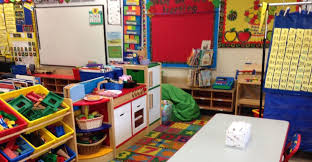
- Symbol: the class fish in H-5 sees everything and reaches nothing — a small, ordinary emblem of the whole novel. The Medi-Talker is the opposite symbol: a key that opens doors, and an object that can be left behind at the worst possible moment.

Point of View
The narrator is Melody Brooks. The novel uses first person and is framed by Melody's autobiography assignment, which returns in the last chapter. [3] [5] [2]
Narration terms and evidence
1. First Person
The handout defines first person as the narrator being a character in the story and referring to themself as "I." Every fact about Melody arrives through that "I," including the facts she cannot verify — she can tell you what her mother said, and what her mother's face did, but not what her mother was thinking.
"I have never spoken one single word. I am almost eleven years old." [1]
Effect: readers encounter Melody's thoughts directly rather than learning about her only through other characters.
2. Perspective
The handout separates point of view (who is telling) from perspective (how the characters view and process what happens). Both are on display, and the novel is built on the gap between them.
- The practice-test score is proof of ability to Melody and evidence of cheating to Mr. Dimming.
- The trip to Washington is a reward to the team and an abandonment to the one member they did not call.
- Being cared for is a gift to Diane and a daily loss of privacy to Melody.
Interpretation: the contrast shows how the same event can look different to people with different information and assumptions.
3. Narrative Distance
The handout describes narrative distance as the proximity of the narrator to the subject. Here it is almost zero — and the consequence is the book's sharpest technical effect.
"I can't take any more, Melody!" [1]
Effect: readers know Melody's intentions in this moment, while Diane does not. That difference makes the scene especially tense.
4. Bias and reliability
Melody tells the story from her own perspective and describes mixed feelings, including jealousy of Penny. This limited perspective is not by itself proof that she is unreliable; consider which events she can observe and where she may be interpreting another person's motives.
The handout's questions, answered
- Who is telling the story, and from what point of view? First person, Melody Brooks, throughout.
- Does the narrator ever speak directly to "you"? The frame presents Melody writing for a class assignment; readers can consider how that implied audience shapes her account.
- Does the story change perspectives? No, and the refusal is the point. The author's own discussion guide asks how the book would change if it were told from the parents' view or from an outside observer. [2] The novel answers by never handing them the microphone.
- Can you trust the narrator? Assess claims against what Melody observes and what the text reveals; first-person narration alone does not establish unreliability.

Tone
Attitude — the author's side
Selected scene: the car, the morning after the team flies to Washington without her. Melody sees Penny behind the van and cannot make her mother understand.
Evidence from the story: she screams, hits, kicks and grabs at her mother; her mother shouts that she cannot take any more and puts a hand on the keys; Melody scratches her mother's hand trying to get the keys. The narrator's sentence at the end names the condition the whole book has been describing.
"I had to tell her that Penny was out there! Never had I wanted words more. I was going out of my mind." [1]
Possible attitude: Empathetic . The narration gives close attention to Melody's fear and urgency; support this reading with the quoted line. The word describes a possible authorial effect, not a single required answer. [8]
Locator: the chapter after the team travels, in the car, before the hospital. Record your edition's page here: ______________
Mood — the reader's side
The mood is built from short sentences, sensory catalogue, and long passages in which nothing is said at all. You can feel the heat of a house through a furnace; you can feel the inside of a car going silent. Possible mood words for your reaction: Vulnerable , Anxious , Hopeful . [8]
Does the whole book have one tone?
Interpretation: it starts alienated and ends defiant , and it never becomes sentimental. The reception record is a useful corrective: reviews from School Library Journal , Booklist and Kirkus Reviews were starred, while Publishers Weekly criticised the plot for a lack of tension. [5] Quote the criticism in discussion. A book can be well loved and still be doing something a plot-shaped book does not.
Emotional Sparks
The pamphlet asks for excerpts with page numbers, plus your emotional reaction explained in mood words. [8] Record the page from your own copy beside each excerpt.
Spark 1 — the car. Locator: the climax; search your copy for the line about never having wanted words more.
"Never had I wanted words more." [1]
Mood word: Vulnerable — capable of being hurt. Personal response (replace this with your own): the sentence works because it is short and past tense, as though the memory has already been filed. My reaction was frightened rather than sad, because nothing in it gives anyone a chance to act differently.
Spark 2 — the practice test. Locator: the fifth-grade room, just after the Medi-Talker arrives.
"I always start with the basics. These children need constant review because they don't retain information like the rest of us." [1]
Mood word: Ridiculed — speech or action intended to cause contemptuous laughter at a person. Interpretation: nobody in this scene intends a joke, which is exactly what makes it one. Personal response (replace this with your own): my reaction was angry , because the sentence sounds like a professional judgement rather than an insult.
Spark 3 — the airport. Locator: the chapter after the regional competition, when nobody calls.
"The entire airport felt like a vacuum. No sound. No voices. No air." [1]
Mood word: Apathetic — little or no interest, concern or emotion. Personal response (replace this with your own): the list of absences is what got me. A loud place is described by what it contains; this one is described by what it no longer has.

Close Reading Vocabulary
Novel Vocabulary
- tangy
- sharp-smelling or sharp-tasting. "The tangy odor of heated dust as the house warmed up." Locator: the opening pages, where Melody lists the noises, smells and tastes of her mornings. [1]
- painted musical soundtrack
- Melody's name for music she experiences as colour and as smell; she can "almost hear colors and smell images." Locator: the same opening pages. [1]
- Medi-Talker
- the assistive communication device: a computer that speaks Melody's words out loud, widening what she can say from a few dozen phrases to tens of thousands. Locator: the chapter in which it arrives. [6]
- H-5
- the special-education classroom at Spaulding Street Elementary School. The room number matters: it is how a child is sorted before anyone has met her. Locator: the first chapter. [5]
- retain
- to keep and remember; used in the sentence that reduces Melody's class to a memory problem. Locator: the fifth-grade room, when the teacher tests Melody. [2]
- Ollie
- the name of the class fish kept in H-5. The author's own discussion guide asks what is significant about "the story of Ollie the fish" and whether Ollie's life mirrors Melody's. Locator: the H-5 scenes. [2]
- Elvira
- the name Melody gives her computer. The author's discussion guide asks why she chooses it. Locator: after the Medi-Talker arrives. [2]
- paparazzi
- photographers who follow celebrities; Melody's joke about her father following her baby sister with a camcorder. Locator: the chapter that introduces Penny. [1]
- autobiography
- an account of a person's life written by that person. The novel you are holding is one, which is why its last chapter turns back into a school assignment. Locator: the final chapter. [5]
Resource words to know
The handouts list words that will be tested. The definitions below are the handouts' own wording, and each is cited to its file and page.
- Attitude vs. Mood.pdf, p. 1 — Ambitious: eagerly desirous of achieving or obtaining success, power, wealth, a specific goal. Apathetic: having or showing little or no interest, concern or emotion. Cheeky: boldly rude, impudent or disrespectful (the handout's own line breaks off mid-definition). Nauseated: filled with disgust; sickness stemming from the stomach. Ridiculed: speech or action intended to cause contemptuous laughter at a person or thing. Skeptical: doubtful about a particular thing. Vulnerable: capable of or susceptible to being attacked, damaged or hurt. [8]
- Setting Details.pdf, p. 2 — Arid: without moisture; extremely dry. Desolate: deprived or destitute of inhabitants; deserted. Enigmatic: puzzling; perplexing. Foreboding: a strong inner feeling of future misfortune. Melancholy: a gloomy state of mind, especially when prolonged. Ominous: indicating the nature of a future event, for good or evil. Somber: gloomily dark; shadowy; dimly lighted. [8]
- Character Traits.pdf, p. 2 — Astute: keenly perceptive or discerning. Austere: severe in manner or appearance; uncompromising. Ingenious: cleverly inventive or resourceful. Precocious: unusually advanced or mature in development. Robust: strong and healthy; hardy. Unkempt: uncared-for or neglected; disheveled. Urbane: reflecting elegance and sophistication in expression. [8]
- Theme & Big Ideas.pdf, p. 2 — Judgement: Acceptance, Guilt, Hypocrisy, Injustice, Innocence, Oppression, Prejudice, Racism, Redemption, Resistance, Truth, Vanity, Virtue. Deception: Alienation, Betrayal, Disillusionment, Free Will, Greed, Honesty, Jealousy, Manipulation, Trust, Violence. [8]
Theme & Big Ideas
Big Ideas to Consider
- Love: Friendship, Companionship, Acceptance, Belonging.
- Deception: Betrayal, Trust, Manipulation, Dishonesty — none of it malicious, which is why it works.
- Good & Evil: Discrimination, Injustice, Selfishness, Hypocrisy.
- Coming of Age: Identity, Knowledge, Self-Esteem, Individuality.
- Suffering: Oppression, Loneliness, Heartbreak, Grief.
- Circle of Life: Loss, Mortality, Friendship.
Which Big Idea this novel actually earns
Possible Big Ideas include Acceptance , Belonging , Communication , Prejudice and Identity . Choose one or more and trace how the novel develops them; the interpretation should fit the full story. [5]
Running alongside it: Friendship and Belonging (the team, Rose, and the bet), and Identity and Knowledge (a girl who must know who she is without anyone confirming it).
Finished Theme Statement
Template from the handout: "A central issue that reappears throughout ____ by ____ is ____. This issue is exemplified when ____, ____, and ____. It is at these pivotal moments the reader realizes the theme that ____."
A central issue that reappears throughout Out of My Mind by Sharon M. Draper is how assumptions can limit a person's opportunities. This issue is exemplified when Melody is given work below her ability, when her quiz score is doubted, and when communication fails in the car. These moments suggest that listening to people and recognizing their abilities requires more than judging by appearances. [1]
Questions
1. Why does the novel open and close with the same paragraph?
Possible answer: the last chapter reveals that Melody is writing an autobiography for an assignment, and the repeated paragraph becomes its opening.
Reading: the repeated words invite comparison between Melody's circumstances at the start and what the reader has learned by the end.
2. Who is the real obstacle — a teacher, a friend, two bullies, or an assumption?
Possible answer: no single character is the only obstacle. Several characters' assumptions and choices create difficulties for Melody.
Reading: compare how different people respond to her communication and abilities before deciding whether a person, an attitude or a broader barrier is most important.
3. Molly and Claire think a body that cannot speak is a mind that cannot think. What does the novel do about that?
Suggested answer: it refuses to settle the matter with kindness. Being told "you are not disabled in the mind" would concede the question; instead Melody wins a regional quiz competition in front of them, and the narrator lets the reader notice that an opinion like theirs was never the kind of thing that could be argued out of existence.
Analysis: the book's position is structural rather than moral. Access to proof is the real remedy, and even a perfect score does not fully deliver it. That is a harder claim than "be nice," and it is the one the plot supports.
4. Why does the Medi-Talker solve the communication problem but not the credibility problem?
Possible answer: it gives Melody a way to speak words aloud, but it cannot guarantee that people will believe or listen to her. In the car scene, she cannot use it to communicate her warning.
Reading: the novel distinguishes access to communication from other people's willingness to understand.
5. Is Rose's apology enough?
Possible answer: the apology may matter, but readers can question whether it repairs the hurt caused by leaving her behind.
Reading: Melody drops the offered trophy and it breaks. The moment can be read as anger, disappointment or rejection of a gesture that cannot undo what happened.
6. What does Diane Brooks do in the car, and how should we judge her?
Suggested answer: she cannot decode her daughter's screaming and she reverses. The novel does not let her off, but it refuses to make her a villain either.
Analysis: the scene works because Diane is the person who has done the most to make Melody understood and the one person in the car who still cannot translate her. Reading her as a villain makes the book easy; reading her as a parent doing her best without the tool makes it true.
7. How does Draper keep a sad book from turning into a book about pity?
Possible answer: Melody's humor, interests and mixed feelings give her a personality beyond her disability; the first-person narration lets readers encounter those thoughts directly.
Reading: consider how particular scenes balance painful events with Melody's voice and observations.
8. How would the novel change if it were written in the third person?
Possible answer: a third-person version could create distance from Melody or provide access to other characters' perspectives, depending on the narrator chosen.
Reading: Draper's discussion guide asks readers to consider third person, a parent's viewpoint or an outside observer; these choices would emphasize different information and relationships. [2]
9. Explain the title.
Suggested answer: at least three readings work. The idiom "out of my mind" means confused or overwhelmed, which is exactly Melody in the car. The title also names the autobiography she is writing — a mind on paper, when the body cannot speak. And it names what the adults do to her: out of her mind, that is, not in it.
Analysis: the author's guide asks for several possible interpretations, which is a hint that the title is doing more than one job at once. [2] Bring your own; a reading you can defend from two specific scenes is worth more than one that merely sounds clever.
10. What creates tension after the regional competition?
Possible answer: the airport disappointment and the later accident shift attention from the team's result to Melody's relationships, communication and safety.
Reading: readers may differ about the pacing. Support your view with scenes from both halves rather than assuming the competition resolves the novel's conflicts.
11. What is the central conflict, in one sentence you could defend in an essay?
Suggested answer: a child has the ability to be understood and almost no power to make anyone listen.
Analysis: test yours against all five plot stages; if it fails at any one of them, it is not yet the central conflict. The handout asks for theme to hold for beginning, middle and end, and the same test applies to a conflict sentence. It is the fastest way to discard a summary that only describes the exciting parts.
Works Cited
Badge numbers match the in-text citations. Each badge returns to the most recently followed reference.