Of Mice and Men
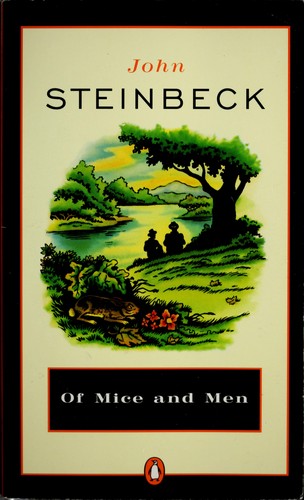
John Steinbeck’s 1937 novella follows migrant ranch workers George and Lennie as they travel through California’s Salinas Valley, holding onto a shared dream of a place of their own. This companion offers close readings and chapter locators; bring your own evidence and page numbers to the pamphlet.
Explore the StoryAbout This Book
Form: a novella of about 30,000 words in six chapters, arranged as three acts of two so it could be staged as a play as well as read [4]
Course fit: read against standard RL.1 — "cite strong and thorough textual evidence to support analysis of what the text says explicitly as well as inferences drawn from the text" ( Directions & Scoring.pdf , p. 1) [6]
Spoilers: Plot, Attitude, Theme, and Questions discuss the ending. Begin with Author if you want to avoid plot details, and return to those sections after reading.
Chapter and search-phrase locators work across editions; add the page number from your own copy. [5]
How to Use This Page With Your Pamphlet
Use this map to find each field’s companion section, then add evidence and page numbers from your copy. [6]
- Name
- Your name
- Author Information
- Author — "important facts of the author's life like the the 5Ws (who, what, when, where, & why)."
- Contextual Information
- Context — how the genre, history, or culture of 1937 shows up in the book.
- Unforgettable Moments
- Plot — exposition, rising action, climax, falling action, resolution, as descriptive phrases with page numbers.
- Important Characters
- Characters — name, key scene with a page number, and four qualities each.
- Close Reading Vocabulary
- Vocabulary — words you did not know, with page numbers and definitions, plus the handouts' tested word list.
- Valuable Details: Setting
- Setting — the four elements, described so they show, not just tell.
- Valuable Details: Narrator
- Narration — the narrator, at least two bolded narration words, and evidence of how the perspective influences the story.
- Valuable Details: Attitude
- Attitude — one emotional scene, with evidence described using an attitude word.
- Emotional Sparks
- Attitude — excerpts with page numbers and your emotional reaction explained in mood words.
- Theme & Big Ideas
- Theme — big idea selection and a finished theme statement in the handout's template.
- Questions
- Questions — sticking points to raise with your reading group, each with a suggested answer.
Contextual Information
Choose the context you can support best; the novella offers evidence of genre, history and culture. [6]
Genre
Steinbeck wrote a novella built to be played. It has six chapters arranged as three acts of two, roughly 30,000 words, and reads like a script: scenes happen in real time, in few locations, mostly through dialogue. [4] One critic called the form a "play-novelette," and Steinbeck's stated aim was a novel that could be played from its lines or a play that could be read like a novel. [4] Within months it was staged as written by the Theater Union of San Francisco, opening May 21, 1937 and running about two months; Steinbeck's adapted version then opened on Broadway on November 23, 1937, produced by Sam H. Harris, directed by George S. Kaufman, and ran 207 performances; a film followed in 1939. [4] That dramatic shape is why the book's emotion lands almost entirely through spoken lines rather than narration — and it is a clean, checkable answer for the genre box.
History
The story is set during the Great Depression , among itinerant ranch workers in California who move from job to job and live out of bedrolls, "searching for jobs during the Great Depression." [4] Steinbeck drew on his own teenage years working alongside migrant farm workers before the Dust Bowl migration he later dramatised in The Grapes of Wrath . [4] The economics are the engine of the plot: steady work is scarce, a man can be fired without notice, and buying even a few acres is far beyond a labourer's wages. The novella came out in 1937, in the middle of the Depression, and was chosen as a Book of the Month Club selection before it was published — the largest positive response to any of Steinbeck's work to that date. [4]
Culture
- A segregated West: Crooks sleeps apart from the other men in the harness room and is kept out of the bunkhouse; the threat used against him shows what a white accuser could set in motion.
- Women at the margins: Curley's wife is never given a name and is spoken about before she is allowed to speak, which the story itself finally corrects in the barn.
- Disability before the language existed: Lennie's condition is described with the harsh period words of 1937; modern editions and classrooms read the same behaviour with different vocabulary.
- A contested classroom text: the novella has been banned or challenged repeatedly for vulgarity, profanity, and racial language, and appears on the American Library Association's most-challenged lists. [4]
"The best laid schemes o' mice an' men / Gang aft agley" [7]
The title comes from Robert Burns's 1785 poem "To a Mouse," in which a ploughman apologises to a mouse whose nest he has destroyed. Steinbeck first called the story Something That Happened , then took the title from the poem after reading it. [4] The culture of the time also shaped the words: the poem's idea that careful plans still come to grief matches a decade in which honest work did not guarantee food.
Characters
George Milton
Lennie's companion • Small, quick, sharp-featuredA small, restless man who looks after Lennie and keeps the shared dream alive. He complains about Lennie and never leaves him; without Lennie he would be just another lonely worker, earning a stake only to spend it in town every Saturday night.
Mental
Pragmatic : he sizes up Curley in a minute, coaches Lennie on what to say to the boss, and plans the farm in detail.
Moral
Loyal : after the Weed incident he stays with Lennie instead of abandoning him, and carries the burden of protecting him.
Physical
Slender and "small and quick," with dark features and restless eyes — Lennie's opposite in every measurement.
Social
Guarded : he snaps at Lennie in front of strangers to look tough, yet is the only man on the ranch with a true friend.
Key scene: George tells Slim the whole story of Weed, then admits he could live easily without Lennie — and would not trade him for it. Ch. 3 • search: "this girl in a red dress"
Lennie Small
George's companion • Huge, powerful, childlikeA very large man with a severe intellectual disability, remembered by George since childhood. He loves soft things and forgets everything except the dream of tending rabbits. His strength, uncontrolled, drives the tragedy.
Mental
Forgetful : he cannot hold instructions, but he can repeat the farm dream word for word because he wants it more than anything.
Moral
Kind : he means no harm to any living thing, and his worst acts all begin as affection.
Physical
Enormous and bear-like, dragging his feet as he walks, with a strength he cannot judge.
Social
Dependent : he needs George for words, rules, and safety, and is frightened to his core of being left alone.
Key scene: Lennie asks George to tell the story again, promising this time he will remember. Ch. 1 • search: "I remember about the rabbits"
Candy
Old swamper • One hand, loyal old dogAn aging ranch handyman who sweeps the bunkhouse and fears being thrown out when he can no longer work. His dog's death breaks something in him, and he throws his life savings into George and Lennie's farm dream.
Mental
Calculating : once he hears the farm described, he works out the exact money needed and offers to join.
Moral
Regretful : he blames himself for letting a stranger shoot his dog, and carries it afterward.
Physical
Ailing : an old man missing a hand, aware that his body is running out of uses.
Social
Wistful : he wants a place at the fire, a corner of the farm, and someone to grow old beside.
Key scene: Carlson shoots Candy's dog; Candy lies still, then offers George his money for the little farm. Ch. 3 • search: "I ought to of shot that dog myself"
Crooks
Stable buck • Lives alone in the harness roomThe Black stable hand, isolated by the racism of the ranch. Proud and bitter, he reads books in his cramped room. Lennie's ignorance of the rules lets Crooks say out loud what he really wants — and then take it back.
Mental
Skeptical : he has seen a lifetime of men with impossible plans and expects this one to fail too.
Moral
Proud : he guards his dignity fiercely, and is ashamed later of how he frightened Lennie.
Physical
Crooked-backed : a permanent injury that both names him and keeps him to heavy stable work.
Social
Withdrawn : barred from the bunkhouse, he keeps the other men out before they can keep him out.
Key scene: Crooks lets slip how lonely he is, then asks whether he might hoe a little garden on the men's farm — and laughs it off. Ch. 4 • search: "A guy needs somebody to be near him"
Curley's Wife
The boss's son's wife • Never namedA young, restless woman who wanders the ranch looking for someone to talk to. Everyone warns the men away from her, but in the barn she finally says what she wanted from life: to be seen, and to be somebody.
Mental
Naïve : she still believes a stranger's promise of Hollywood wrote to her and simply never came.
Moral
Cruel when cornered: she threatens Crooks with a lynching to re-establish her power in the room.
Physical
Pretty : curling iron, red nails, soft hair — the appearance she staked her hopes on.
Social
Isolated : she is married, but her husband forbids conversation, so she flirts because it is the only speech available.
Key scene: In the barn she admits she is never allowed to talk to anyone, then tells Lennie about the movies she almost was in. Ch. 5 • search: "I can't talk to nobody but Curley"
Slim
Jerkline skinner • The authority of the ranchThe lead driver of the mule team, respected by everyone, including Curley. He sees straight through people: he is the only character who understands what George and Lennie are to each other, and the only one who understands what George does at the end.
Mental
Insightful : he reads character instantly, and reads the final scene correctly without being told.
Moral
Decisive : he drowns the weakest puppies so the litter can live, and stands by George afterward.
Physical
Steady : tall, quiet-handed, with a deep voice and a natural calm that settles rooms.
Social
Respected : the men take his word as final, and he speaks rarely enough that it carries.
Key scene: Slim walks George away from the river and tells him he had no choice. Ch. 6 • search: "You hadda, George"
Curley
The boss's son • Ex-boxer, combativeThe boss's small, aggressive son, recently a boxer, wearing a glove full of vaseline to keep his left hand soft for his wife. He picks fights with large men and attacks Lennie twice; the second fight costs him his hand.
Mental
Defensive : he interprets laughter, size, and friendliness as threats to his status.
Moral
Selfish : he treats the ranch hands as rivals, and his wife as property he must police.
Physical
Compact and quick, a trained fighter who depends on speed and resentment.
Social
Abrasive : his father's position lets him wound people without ever paying for it.
Key scene: Curley attacks Lennie in the bunkhouse and Lennie holds his hand until George tells him to stop. Ch. 3 • search: "glove's fulla vaseline" (Ch. 2 introduces him)
Carlson
Ranch hand • Strong, tactlessA thick-bodied hand who cannot stand the smell of Candy's old dog and shoots it without sentiment. He is also the man who finds Curley's wife's body and, at the very end, cannot understand George and Slim's grief.
Mental
Blunt : he says exactly what he notices and never imagines that others feel differently.
Moral
Indifferent : he offers to shoot another man's dog as a favour, with no grasp of what it means.
Physical
Robust * — "strong and healthy; hardy; vigorous" — strong enough to lift the dog easily and confident with a gun.
Social
Boorish * — "unmannered; crude; insensitive" — his last question, what is wrong with those two, shows he will never understand the story he just watched.
Key scene: Carlson takes Candy's dog out to shoot it, and Candy does not stop him. Ch. 3 • search: "I ought to of shot that dog myself"
"Guys like us, that work on ranches, are the loneliest guys in the world." [1]
Read Curley's wife against Steinbeck's own account of her, which is useful for the group argument but should not be treated as the only meaning: he described her as "not a person, she's a symbol. She has no function, except to be a foil – and a danger to Lennie," and in a later letter to the actress who played her, he wrote that her harsh, flirtatious behaviour is "a method of defense against her fear for isolation and desperate craving for companionship." [4] Both readings — symbol first, then person — are supported; the novella itself finally chooses the second.
Plot
Exposition
A hot evening on the Salinas River, a few miles south of Soledad: two men in denim come down the path in single file, one small and quick, one huge and dragging his feet like a bear. They drink, squabble, and reveal what they are running from — the incident in Weed — and George rehearses the dream Lennie lives for: a little place, cows, pigs, and rabbits. [1]
Ch. 1 • search: "A few miles south of Soledad"
Rising Action
At the ranch the next day: the boss questions them, Curley takes an instant dislike to Lennie, and George warns Lennie away from the boss's son's flirtatious wife. George and Slim talk, and George retells Weed — Lennie held a girl's red dress and would not let go. Candy's old dog is put down by Carlson, and Candy, gutted, offers his life savings toward the farm. Curley attacks Lennie and his hand is crushed. In the stable, Crooks tests the dream and, for a moment, wants in. Curley's wife tells Lennie her Hollywood dream. The farm suddenly feels close enough to buy. [1]
Ch. 2–4 • search: "that glove's fulla vaseline" • "I ought to of shot that dog myself" • "A guy needs somebody to be near him"
Climax
In the barn, Lennie has accidentally killed his puppy. Curley's wife finds him, confesses her loneliness, and lets him stroke her hair; when he does not stop, she panics and screams, and Lennie, frightened, breaks her neck. He covers her with hay and slips away to the river, to the hiding place they agreed on. [1]
Ch. 5 • search: "Please don't do that. George'll be mad"
Falling Action
Candy finds the body and knows the farm is dead; Curley organises a posse to hunt Lennie down; George slips away first. At the pool, Lennie's fear erupts into a hallucination — Aunt Clara and a giant rabbit accuse him of ruining everything — until George arrives and calms him by beginning the dream again. [1]
Ch. 5–6 • search: "Aunt Clara"
Resolution
With the men shouting in the distance, George tells the farm story once more while Lennie looks across the river, then shoots him from behind. Slim understands immediately and leads George away: "You hadda, George. I swear you hadda." Curley and Carlson are left staring after them, unable to read what they have just seen. [1]
Ch. 6 • search: "Look acrost the river, Lennie"
"You hadda, George. I swear you hadda." [1]
Setting
Geographical Location
The action sits in California's Salinas Valley: a green pool on the Salinas River a few miles south of Soledad, with the Gabilan Mountains on one side and the foothills on the other; then a ranch of bunkhouse, barn, harness room, and whitewashed walls; and finally the river pool again. The windows and doors matter — the bunkhouse's solid door, Crooks's square four-paned window, the barn's sliding entrance — because they decide who may enter where. [1]
Ch. 1 • search: "A few miles south of Soledad"
Occupations and Daily Living
Itinerant ranch hands: bucking grain bags, feeding mules and chickens, cleaning stalls, branding, and waiting on the boss's orders. Wages are drawn and spent; Saturdays mean town. Candy sweeps, Crooks tends the horses, Slim drives the mule team, Curley shadows his father's property.
Time Period
Late-1930s California, during the Great Depression, in harvest season — thrashing machines are running, the days are hot, and the shade climbs the hills by evening. The story spans only a few days, from one evening at the pool to the next visit there after the ranch events. [1]
General Environment
The social and emotional weather: loneliness as the default condition, money fear under every decision, a colour line drawn through the harness room, a woman with nowhere to stand, and a hierarchy that runs boss → son → hands. Guides have noted that the town's name, Soledad, is Spanish for "solitude." [4]
"A few miles south of Soledad, the Salinas River dropped in close to the hillside" [1]
Descriptions That Show, Not Tell
- Seen
- Water "slipped twinkling over the yellow sands"; crisp sycamore leaves lying deep; rabbits sitting "as quietly as little gray sculptured stones"; evening shade climbing the hills; the whitewashed bunkhouse with eight bunks; the barn stacked to the roof with new hay.
- Heard
- Footsteps on crisp leaves; a heron beating up river; Lennie snorting at the pool "like a horse"; horseshoes ringing outside the bunkhouse; the posse shouting on the last evening.
- Felt
- Warm river water; the grit of sand; the hot day cooling into evening; Crooks's liniment; the softness of hair that the story keeps returning to.
Ch. 1 • search: "A few miles south of Soledad"
The Four Lenses
- Plot: The pool is the frame — the men sleep there before the ranch and meet there after it, and the agreed hiding place makes the final meeting inevitable.
- Setting (imagery): Heat, shade, water, and hay carry the mood; the same river that opens in evening calm closes in evening calm.
- Character: Crooks's shed "leaned off the wall of the barn" — his isolation is built into the floor plan. Curley's wife is forever "in the barn" or "in the doorway," a person with no allowed room.
- Symbol: The little farm with the cow and rabbits stands for security itself; the pool is a birthplace and a killing ground at once.
Point of View
Of Mice and Men has no named storyteller. An unseen narrator stands outside the story and reports it in the third person — the "(s)he" form, defined in the handout as when "the narrator is looking in on the person or people being talked about" — in past tense, moving like a camera from scene to scene. [6]
Third Person
The narrator is looking in on the people being talked about. Everything is reported: two men come down the path to the river; Lennie fills his whole head in the water; George raises the gun and his hand shakes. No "I" ever appears, so no character is telling you this — which means you must judge every action yourself.
Evidence • Ch. 1 • search: "A few miles south of Soledad"
Selective Omniscient Narration
The narrator is not strictly limited to one character: stage directions reveal external actions, and occasional narration gives brief access to a character's sensations or thoughts. But the text does not establish unrestricted knowledge of every mind. Lennie's Aunt Clara episode, for example, is explicitly presented as his hallucination rather than proof that the narrator is all-knowing. A careful description is third-person narration with selective shifts in closeness, not simply "omniscient."
Evidence • Ch. 6 • search: "Aunt Clara"
Narrative Distance
The camera stays closest to George and Lennie, especially in Chapter One, where the dream is learned through their bickering. Other characters are initially filtered through what the men say about them: Curley's wife is warned about for chapters before the reader hears her at length in the barn. That distance can make the reader adopt the ranch's suspicion before her account complicates it. This is an effect of the narration; it does not prove a single authorial intention.
Evidence • Ch. 2 • search: "I'm lookin' for Curley" (first time she speaks)
Perspective
How the characters view and process what is happening, as opposed to who narrates it: the same farm dream looks different through each pair of eyes. To Lennie it is rabbits; to George it is freedom from needing anyone's permission; to Crooks it is a trick that has never once paid off; to Candy it is a way not to be discarded. The narrator reports all four views without endorsing one.
"A guy needs somebody to be near him." [1]
Tone
Attitude: the Emotional Scene
Selected scene: the last evening at the pool (Ch. 6), when George shoots Lennie while telling him the farm dream one more time. Ch. 6 • search: "Look acrost the river, Lennie"
Evidence from the story: George does not shout. He answers Lennie's worry ("I ain't mad") and begins the whole catalogue of the farm — the cow, the pigs, the alfalfa, the rabbits — in the same words he used in Chapter One. He waits until Lennie is looking away across the river. Slim's first words afterward justify him: "You hadda, George." The narrator reports the shot in one flat sentence and lets the men's reactions do the rest. [1]
Attitude word: Compassionate — the author's attitude toward this act reads as tender rather than condemnatory. A second defensible reading is Forgiving : the novella never lets anyone be blamed, and Steinbeck himself called his own way of seeing "something that happened." [4] Both are attitude words from the handout's moral list, so either earns the box; say which one you are claiming and give the evidence for it.
"Look acrost the river, Lennie" [1]
The last thing George says before he fires is a direction to look at a place that does not exist yet. The attitude is in that choice: even the killing is framed as the dream.
Mood: What the Reader Feels
The mood is built from short sentences, plain words, animals, water, and quiet before each blow. A reader might find a scene anxious, lonely, hopeful, or shocking, but those are possibilities, not the reaction the assignment requires. Choose a mood word that fits your response and explain what detail produced it. Vulnerable is one tested word from the handout; it can also describe how the dog, puppy, Lennie, and the dream are exposed to harm. [6]
Emotional Sparks: Excerpts and Reaction
The handout gives you four blank quotation lines on p. 2. Here are three brief excerpts to check, each with a chapter/search locator, a mood word, and a model reaction. Record the page from your copy beside each excerpt.
Spark 1 — Ch. 1 Ch. 1 • search: "loneliest guys in the world"
"Guys like us, that work on ranches, are the loneliest guys in the world." [1]
Possible mood word: Isolated . Sample response, not a required feeling: the general phrase "guys like us" can make one speaker's loneliness feel shared; you might instead feel hopeful because George and Lennie have each other.
Spark 2 — Ch. 5 Ch. 5 • search: "I can't talk to nobody but Curley"
"I get lonely… I can't talk to nobody but Curley." [1]
Possible mood word: Vulnerable . Sample response, not a required feeling: her admission can make a reader reconsider the earlier warnings; another reader may remain uneasy because her loneliness does not erase the threat she makes to Crooks.
Spark 3 — Ch. 3 Ch. 3 • search: "I ought to of shot that dog myself"
"I ought to of shot that dog myself" [1]
Possible mood word: Grieved . Sample response, not a required feeling: Candy's regret may feel painful because he wishes he had made the decision himself; the scene may also make a reader wary of the later choice George faces.
Close Reading Vocabulary
Novel Vocabulary
Each entry gives a chapter , the stable anchor, and a search phrase ; add your own edition's page number beside it.
- bindle
- A travelling worker's bundle of belongings, carried rolled or on a stick. Ch. 1 • search: "unslung his bindle"
- jungle-up
- To make camp for the night in the brush near water. Ch. 1 • search: "to jungle-up near water"
- thrashin'
- Machine threshing — the harvest work that is running while the men walk to the ranch. Ch. 1 • search: "thrashin' machines"
- bucking grain bags
- Lifting and stacking heavy sacks; hard labour George expects the next day. Ch. 1 • search: "buckin' grain bags"
- work up a stake / blow a stake
- To earn a sum of money, then spend all of it. Ch. 1 • search: "work up a stake"
- off the fatta the lan'
- Lennie's way of saying that everything they need will simply be there — the dream in three words. Ch. 1 • search: "fatta the lan'"
- swamper
- The man whose job is cleaning the bunkhouse. Ch. 2 • search: "the old swamper"
- jerkline skinner
- The driver of a long team of mules; the top hand on a ranch. Ch. 2 • search: "jerkline skinner"
- flop
- Slang for a cheap bed for the night. Ch. 2 • search: "if a guy don't want a flop"
- kewpie doll
- A small moulded doll, sold as a souvenir — one of Curley's wife's images of a furnished life. Ch. 2 • search: "kewpie doll lamp"
- liniment
- A medicinal rub for aches, kept on the shelf with a man's comb and soap. Ch. 2 • search: "bottle of pills, his liniment"
- snooker
- A cue sport; it is the game Lennie's hallucinated aunt imagines George playing instead of caring for him. Ch. 6 • search: "snooker"
Tested Words From the Character Traits Handout
"The following words will appear on a vocabulary test at the end of the year." ( Character Traits.pdf , p. 2) [6]
- Astute
- keenly perceptive or discerning; shrewd or cunning
- Austere
- severe in manner or appearance; uncompromising; strict; forbidding
- Bigoted
- utterly intolerant of any creed, belief, or opinion that differs from one's own
- Boorish
- unmannered; crude; insensitive
- Caustic
- severely critical or sarcastic
- Convivial
- friendly; agreeable
- Cordial
- courteous and gracious
- Debonair
- courteous, gracious, and having a sophisticated charm
- Degenerate
- an immoral or corrupt person
- Dissolute
- indifferent to moral restraints; given to immoral or improper conduct
- Emaciated
- abnormally thin or weak, especially because of illness or a lack of food
- Grotesque
- a very ugly or comically distorted figure, creature, or image
- Ingenious
- cleverly inventive or resourceful
- Obtuse
- not quick or alert in perception, feeling, or intellect; not sensitive or observant; dull
- Odious
- deserving or causing hatred; hateful; detestable. highly offensive; repugnant; disgusting
- Petulant
- moved to or showing sudden, impatient irritation, especially over some trifling annoyance
- Precocious
- unusually advanced or mature in development, especially mental development
- Provincial
- a person who lacks urban sophistication or broad-mindedness
- Robust
- strong and healthy; hardy; vigorous
- Unkempt
- uncared-for or neglected; disheveled; messy
- Unscrupulous
- conscienceless; unprincipled
- Urbane
- reflecting elegance, sophistication, etc., especially in expression
- Vulgar
- indecent; obscene; lewd
Tested Words From the Attitude vs. Mood Handout
"The following words will appear on a vocabulary test at the end of the year." ( Attitude vs. Mood.pdf , p. 1) [6] The Cheeky entry is reproduced exactly as it appears in the handout, which breaks off mid-definition.
- Ambitious
- eagerly desirous of achieving or obtaining success, power, wealth, a specific goal, etc.
- Apathetic
- having or showing little or no interest, concern, or emotion
- Cheeky
- boldly rude, impudent, or disrespectful in usually a playful or appealing [the handout's line ends here]
- Nauseated
- filled with disgust: sickness stemming from the stomach
- Ridiculed
- speech or action intended to cause contemptuous laughter at a person or thing
- Skeptical
- doubtful about a particular thing
- Vulnerable
- capable of or susceptible to being attacked, damaged, or hurt
Tested Words From the Setting Details Handout
The same promise appears in the setting handout: "Some of these words* will also appear in our last unit's vocabulary test" ( Setting Details.pdf , pp. 1–2). [6]
- Arid
- being without moisture; extremely dry; parched
- Barren
- not producing or incapable of producing; sterile
- Desolate
- deprived or destitute of inhabitants; deserted; uninhabited
- Enigmatic
- a puzzling occurrence, situation, statement, person, etc.; perplexing; mysterious
- Foreboding
- a strong inner feeling or notion of a future misfortune, evil, etc.; presentiment
- Grandiose
- affectedly grand or important
- Idyllic
- portrays an idealized scene of peace, charm, and rustic simplicity
- Melancholy
- a gloomy state of mind, especially when habitual or prolonged; depression
- Ominous
- indicating the nature of a future event, for good or evil
- Pristine
- having its original purity; uncorrupted or unsullied
- Sinister
- threatening or portending evil, harm, or trouble
- Somber
- gloomily dark; shadowy; dimly lighted
- Sublime
- the greatest or supreme degree of goodness
- Whimsical
- playfully quaint or fanciful, especially in an appealing and amusing way
- Zealous
- showing great energy or enthusiasm in pursuit of a cause or objective
Theme & Big Ideas
Big Ideas to Consider
Every pick below is on the handout's own Big Idea chart, with the chart's category and page, so your selection can be defended from the source rather than from memory. [6]
- Companionship — Love, p. 1. George and Lennie choose each other; everyone else is alone.
- Friendship — Love and Circle of Life, p. 1. The same idea from a second chart.
- Hope — Love, p. 1; War & Peace, p. 1; Judgement, p. 2. The farm is described, re-described, funded, and finally told one last time.
- Loneliness — Suffering, p. 1. Candy, Crooks, Curley's wife, and the hired hand who earns a stake only to spend it in town again.
- Injustice — Suffering, p. 1; Judgement, p. 2. Curley's privilege, the colour line, a woman with no name, a man who cannot protect himself.
- Power — Survival, p. 1; Judgement, p. 2. Who can hurt whom, and how little it costs those in charge.
- Vulnerability — Survival, p. 1. The dog, the puppy, Lennie, and the dream itself: everything tender is also breakable.
- Fate — Love, p. 1; Judgement, p. 2; Good & Evil, p. 2. The title promises it; the novella spends more time on the people caught in it.
- Grief and Heartbreak — Suffering, p. 1. Candy's dog, then Lennie.
- Guilt — Suffering, p. 1; Judgement, p. 2. Candy's and George's, over the same kind of accident.
Finished Theme Statement
Template from the handout ( Theme & Big Ideas.pdf , p. 2): "A central issue that reappears throughout ____ by ____ is ____. This issue is exemplified when ____ [Plot Point 1 – Beginning] ____, ____ [Plot Point 2 – Middle] ____, and ____ [Plot Point 3 – End] ____. It is at these pivotal moments the reader realizes the theme that ____ meaning that is relevant to but goes beyond the text—this should be a common human concern."
A central issue that reappears throughout Of Mice and Men by John Steinbeck is the need for companionship and a shared dream to survive hard times . This issue is exemplified when two lonely workers rehearse a promise of a little farm of their own (beginning) , when an old man offers his life savings to buy into that same promise (middle) , and when one friend retells the promise moments before ending the other's life (end) . It is at these pivotal moments the reader realizes the theme that shared hope is what makes hardship bearable, yet dreams held by the most vulnerable people can be destroyed by a world that offers them no protection .
The Ending: What the Text Actually Supports
- Mercy. The posse is minutes away and carries rope. Slim says, "You hadda, George. I swear you hadda," and nobody argues with him. A reading that says something else has to explain why the one character who understands the situation approves of it.
- Ending a dream that could not survive its owner. George has seen the last of it: the money is counted, the woman is dead, and Lennie has already forgotten what he did. The farm existed only for as long as the two of them could repeat it. This reading rests on structure — the last thing George does is narrate the dream again — and it does not require calling the act kind.
- Kindness with a cost. George chooses the method and the moment, and the novella never shows Lennie's relief, because Lennie is shot from behind while looking at a place that does not exist yet. Whether that is mercy or simply the least cruel option available is precisely what the book leaves open.
- Restraint as the point. The narrator reports the shot in one flat sentence and never returns to it. Carlson's closing question — what is wrong with those two — shows that most people in the book never learn what they saw. A group can reasonably argue that the novella delivers its judgement through structure and silence rather than argument, and that any confident moral verdict on George is the reader's, not Steinbeck's.
Questions
1. Why does George shoot Lennie himself?
Suggested answer: because Curley has already organised a posse and would not stop, and because George believes a quick death is better than what Lennie would get from a crowd. Slim, the one man who understands both men, endorses it in a single line — "You hadda, George. I swear you hadda" — while Curley and Carlson never learn what they saw. Compare that with Carlson's closing question, "Now what the hell ya suppose is eatin' them two guys" (Ch. 6): the man who watched the whole thing still cannot read it. Ch. 6 • search: "You hadda, George"
2. Why is Curley's wife never named?
Suggested answer: the novella never gives her a personal name; "Curley's wife" identifies her through her husband's role. That choice can be read as reflecting how the ranch men reduce her to a label, and it shapes how readers first encounter her: through their warnings before hearing her at length in the barn. Her account complicates that first impression without changing the fact that she remains unnamed. Ch. 2 and Ch. 5 • search: "I'm lookin' for Curley"
3. Is the dream ever realistic?
Suggested answer: the dream becomes more concrete when Candy offers his savings, but the figures do not yet add up to the farm's price. In Chapter 3, Candy has about $350; George estimates the place at $600 and says the three of them could save enough within a month if they worked. That calculation makes the plan imaginable, not guaranteed: their wages, continued employment, and the farm's availability all matter. Ch. 3 • search: "six hundred dollars"
4. What is Candy's dog for?
Suggested answer: the dog scene can be read as a parallel to the ending: an old, vulnerable companion is killed by someone close to him, and the survivor is left with regret. Candy's line, "I ought to of shot that dog myself," comes after Carlson has shot the dog; he regrets letting a stranger do it. That later guilt may shape how a reader interprets George's choice, though the two situations are not identical. Ch. 3 • search: "I ought to of shot that dog myself"
5. Why does the story begin and end at the same pool?
Suggested answer: returning to the same river pool gives the novella a frame and makes the ending echo the opening. The setting's repeated description links the scenes, while the changed circumstances and George's final retelling of the farm dream make the return feel different. Notice which details and actions actually recur in your edition rather than assuming every movement is repeated. Ch. 1 and Ch. 6 • search: "A few miles south of Soledad"
6. Was Crooks's hope in Chapter 4 genuine?
Suggested answer: briefly, and the novella lets him say so. He asks whether he might have a small patch of garden on their place, tells them he would help with the rabbits, then immediately retreats into mockery because he has been burned before. Minutes later, threatened with being strung up, the loneliness returns. The pattern — want, joke, shame — repeats, which is why his chapter is the saddest quiet scene in the book. Ch. 4 • search: "A guy needs somebody to be near him"
7. Whose fault is the tragedy?
Suggested answer: several pressures contribute, but readers can weigh them differently. Lennie's grip causes the accident; when Curley's wife screams, he panics and tightens his hold rather than releasing it. Curley's posse makes Lennie's hiding place dangerous, while poverty and isolation shape the characters' limited choices. Steinbeck's descriptions of "something that happened" and "non-teleological thinking" may support a reading that resists a simple moral verdict [4] , but they do not settle questions of responsibility. Make a claim about blame and support it with the scene. Ch. 5 • search: "Please don't do that. George'll be mad"
8. What does the title promise?
Suggested answer: it promises fate, and the novella delivers something more mixed. Burns's ploughman regrets what he could not control; George's plan is undone by an accident none of them planned. But the same story shows careless power doing deliberate damage: Curley's privilege, the colour line drawn through the harness room, a woman with no name. A strong answer says the title names the shape of the plot while the characters supply the moral pressure. Title • search: "The best laid schemes o' mice an' men"
Works Cited
Badge numbers match the in-text citations. Each badge returns to the most recently followed reference. Web sources are listed with their URLs; the course handouts are local PDF files supplied with the packet, so no web address is claimed for them.