Fahrenheit 451
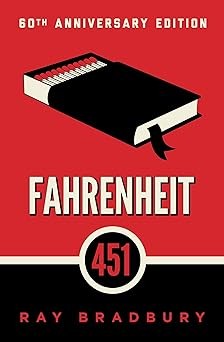
Ray Bradbury’s 1953 novel follows Guy Montag, a fireman in a future society where firemen burn books, as encounters with a curious young neighbor and a retired professor unsettle the life he thought he wanted. This companion offers close readings and part-based locators; bring your own evidence and page numbers to the pamphlet.
Explore the StoryAbout This Book
Form: a novel in three named parts: “The Hearth and the Salamander,” “The Sieve and the Sand,” and “Burning Bright.”
Course fit: standard RL.1 asks readers to cite strong and thorough textual evidence for explicit analysis and inferences ( Directions & Scoring.pdf , p. 1). [5]
Spoilers: Plot, Attitude, Theme, and Questions discuss the ending. Start with Author if you want to avoid plot details, and return after reading.
Locators use the novel’s three named parts and scene anchors rather than edition-specific page numbers. Add the page from your own copy. [1]
How to Use This Page With Your Pamphlet
Use this map to find each field’s companion section, then add evidence and page numbers from your copy. [5]
- Name
- Your name
- Author Information
- Author — the author’s 5Ws (who, what, when, where, why).
- Contextual Information
- Context — genre, history, or culture visible in the novel.
- Unforgettable Moments
- Plot — five stages with descriptive phrases and locators.
- Important Characters
- Characters — key scene and four supported qualities each.
- Close Reading Vocabulary
- Vocabulary — novel words with locations plus tested course glossary.
- Valuable Details: Setting
- Setting — four elements, described to show rather than tell.
- Valuable Details: Narrator
- Narration — bolded narration terms and effects of perspective.
- Valuable Details: Attitude
- Attitude — emotional scene and evidence, separate from reader mood.
- Emotional Sparks
- Attitude — brief excerpts, locators, and model responses.
- Theme & Big Ideas
- Theme — big idea and a complete beginning-middle-end statement.
- Questions
- Questions — discussion questions with evidence-based starting answers.
Weekly Progress Check
Use the scoring guide’s weekly sequence to pace the pamphlet. Each pair names a stopping point; record your own textual evidence and page numbers as you read. [5]
- Week 1: Exposition and Setting
- Week 2: Rising Action and Narration (POV)
- Week 3: Characters
- Week 4: Attitude and Emotional Sparks
- Week 5: Climax and Vocabulary
- Week 6: Resolution and Context
Contextual Information
Choose one context you can support: genre, history, or culture. Each appears in the novel’s conflicts and imagery. [5]
Genre: Dystopian Speculative Fiction
The book imagines a future organized around censorship, surveillance, conformity, and engineered distraction. Rather than presenting a technical blueprint, Bradbury makes those pressures legible through ordinary routines: a firehouse alarm, a wall-sized parlour, earbuds, and a family that is more screen-world than kin. The speculative setting magnifies recognizable choices about what people read, remember, and discuss. [3]
History
Published in 1953, during the Cold War, the novel reflects anxieties about conformity, propaganda, and the control of ideas. Bradbury's own account stresses book burning as a warning drawn from historical examples, including Nazi Germany, and insists that his aim was prevention rather than prediction. [4] This context helps explain the stakes of the firemen’s work, but the novel also criticizes voluntary inattention and social pressure: censorship is not shown as a government order alone.
Culture
- Mass media: Mildred treats the parlour’s interactive programs as family and wears tiny radio “Seashells,” while conversation and silence become uncomfortable.
- Speed and danger: cars race so fast that people and landscape blur; Clarisse’s habit of walking and noticing nature is presented as strange.
- War: looming conflict is background noise until bombers turn it into immediate destruction; private distraction has not protected anyone from public violence.
- Censorship: Beatty describes a gradual cultural process in which people choose simplified, non-offending entertainment before the state enforces book burning.
The historical lesson is not that one medium alone causes tyranny. Bradbury’s warning is about the interaction of pressure, convenience, fear of disagreement, and a public unwilling to sustain attention. The NEA guide’s historical timeline and censorship discussion offer useful context to check alongside the text. [4]
Characters
Guy Montag
Fireman who becomes a readerAt first Montag takes pleasure in burning books and trusts the life he has built. Clarisse’s questions and Mildred’s overdose expose how little he knows about his own happiness. His rebellion is brave but impulsive, and the novel makes his change a process rather than an instant conversion.
Mental
Inquisitive : Clarisse’s questions unsettle his assumptions, and he begins reading to find what books can contain.
Moral
Conflicted : he hides books and later kills Beatty, showing resistance alongside fear and violence.
Physical
Active : his work and escape are represented through movement—running, carrying books, and crossing the river.
Social
Alienated : his marriage lacks intimacy, while his new questions separate him from the firehouse and city.
Key scene: Montag steals a book from the old woman’s burning house and sees her choose to die with her books. Part 1, “The Hearth and the Salamander” • old woman’s house fire
Clarisse McClellan
Montag’s observant young neighborClarisse notices rain, moonlight, and other people, and asks Montag whether he is happy. Her attention provides a contrast to the city’s speed and screens. She is reported dead by Mildred; Montag does not witness her death, and the novel leaves the circumstances outside his direct experience.
Mental
Observant : she connects small sensory details to questions about how people live.
Moral
Independent : she resists the expectation to conform to school and entertainment routines.
Physical
Slender : the opening describes her face and body as slender; on their first walk she moves beneath the moonlight rather than hurrying with the city’s traffic.
Social
Open : she speaks readily with Montag and her family, though the city regards her family as strange.
Key scene: their first walk, where she asks if he is happy and describes her family’s conversations. Part 1 • first walk with Clarisse; search: “Are you happy?”
Mildred Montag
Montag’s wifeMildred is deeply attached to the parlour walls and Seashell radio, and cannot—or will not—engage with Montag’s questions. After her overdose, mechanical operators revive her without a personal physician. Her investment in entertainment is real; reducing her to a villain misses the way the culture has shaped her habits.
Mental
Avoidant : she changes the subject or returns to the screens when conversation becomes painful.
Moral
Complicit : she reports Montag’s books, participating in the system that threatens him.
Physical
Vulnerable : the overdose leaves her dependent on anonymous technicians and machinery for survival.
Social
Detached : she calls the parlour characters her family while her marriage has little shared emotional life.
Key scene: Montag discovers Mildred unconscious after taking sleeping tablets, and the operators replace her blood. Part 1 • bedroom and emergency operators
Captain Beatty
Fire chief and Montag’s superiorBeatty can quote literature and explain the history of censorship, yet deploys that knowledge to defend burning books. His intelligence makes him a more complex antagonist than a simple enemy of reading. Montag interprets Beatty’s final behaviour as a desire for death; that is Montag’s inference, not a certainty the narration confirms.
Mental
Eloquent : he uses many literary references and arguments to unsettle Montag.
Moral
Coercive : he uses authority and threats to enforce the book-burning order.
Physical
Steady : outside Montag’s house he handles the confrontation without retreating, even when Montag holds the weapon.
Social
Authoritative : as chief he commands the crew and knows how to use institutional power.
Key scene: Beatty visits Montag at home and lectures him about the history and rationale of censorship. Part 1 • Beatty’s visit to the sick Montag
Professor Faber
Retired English professorFaber understands what books can offer but has spent years regretting his failure to resist their disappearance. He equips Montag with a two-way listening device and helps plan a way to reproduce a text. His caution gives Montag guidance, while also revealing how fear can turn knowledge into inaction.
Mental
Reflective : he distinguishes the quality of experience books preserve from the physical object itself.
Moral
Regretful : he admits his earlier cowardice, then chooses to help Montag resist.
Physical
Frail : in his apartment the novel depicts an old, slight man with a fragile physical presence; this describes his appearance, not a medical diagnosis.
Social
Isolated : as a retired professor in a hostile culture, he has few allies until Montag seeks him out.
Key scene: Faber explains the “three things” missing from society and agrees to help Montag. Part 2, “The Sieve and the Sand” • Faber’s apartment
Granger
Leader of the book-preserving communityGranger meets Montag beyond the city and introduces a community whose members memorize books to preserve them. He presents memory as a temporary human vessel, not a claim that any one person owns all knowledge. His response to destruction emphasizes rebuilding rather than revenge.
Mental
Patient : he frames preservation as slow study, repetition, and shared transmission.
Moral
Constructive : he directs the group toward remembering and rebuilding after catastrophe.
Physical
Enduring : he and his companions live outdoors and keep moving to avoid detection.
Social
Cooperative : the group shares texts and knowledge rather than treating memory as private property.
Key scene: Granger explains the group’s memorization practice and the “mirror” people they hope to become. Part 3, “Burning Bright” • camp by the river
Other useful figures include the old woman, whose choice to remain with her books makes Montag confront the cost of his work; the unnamed Mechanical Hound, a state tool that turns surveillance into pursuit; and the city’s viewers, whose collective attention is drawn to Montag’s televised chase. These roles invite analysis without requiring invented backstories.
Plot
Exposition
Montag comes home from a book-burning call and meets Clarisse on a walk. She notices the moon, rain, and people; asks whether he is happy; and describes a family that talks together. At home, Mildred lies unconscious after an overdose, while technicians mechanically revive her. The job that once gave Montag pleasure now sits beside a marriage and city life he has not examined.
Part 1, “The Hearth and the Salamander” • first walk with Clarisse; bedroom overdose
Rising Action
At an alarm, an old woman refuses to leave her books and dies in the fire; Montag secretly takes a book. After Clarisse disappears from his routine, Mildred reports that she has been killed by a speeding car, a report Montag cannot independently verify. He turns to Faber, who explains what books preserve and helps him devise a plan; at home, Montag reads to Mildred’s guests, and their reaction exposes the gulf between reading and the parlour culture. The alarm sends the fire crew to Montag’s own house.
Part 1 • old woman’s house; Mildred’s report; Part 2, “The Sieve and the Sand” • Faber and the guests; end of Part 2 • alarm at Montag’s home
Climax
At the house alarm, Beatty forces Montag to burn his own home. When Beatty discovers the listening device and threatens Faber, Montag turns the flamethrower on him and escapes the Mechanical Hound. Some readings place this irreversible confrontation at the climax; others place the city’s destruction at the novel’s ultimate turning point. State the choice and explain what changes because of it.
Part 3, “Burning Bright” • Montag’s house and confrontation with Beatty
Falling Action
Montag reaches the river, which disrupts the Hound’s scent trail, and finds Granger’s group outside the city. They explain that each person has memorized a book or part of one, preserving it until people can read again. The chase continues on city screens, but the broadcast substitutes another victim when Montag escapes.
Part 3 • river escape and meeting Granger’s community
Resolution
A sudden bombing destroys the city while Montag and the group are outside it. Afterward, the survivors set out toward the ruins, considering how to help. Montag recalls passages associated with Ecclesiastes and Revelation. The ending offers neither a guaranteed recovery nor a restored society; it closes with the possibility of carrying memory and beginning again.
Part 3 • city destroyed; walk back toward the ruins
Setting
Geographical Location
The action takes place in an unnamed American city and its outskirts. Concrete locations include Montag and Mildred’s dark bedroom, the firehouse, the McClellans’ home, Faber’s apartment, the river, and the open countryside where the memorizer community camps. The lack of a named city makes the social pattern feel less tied to one map; the river and rural darkness create a contrast with the city’s artificial light and surveillance.
Parts 1–3 • house, firehouse, river, and camp scenes
Occupations and Daily Living
Montag’s routine is a fireman’s shift responding to alarms and burning books. Mildred spends hours with parlour programs and portable Seashell radios; technicians can be summoned to treat an overdose like a routine service call. Clarisse’s family talks, walks, and notices the weather—activities that the surrounding culture regards as unusual. Faber’s retired academic life and the memorizer community’s shared recitation suggest alternative ways of using time.
Time Period
The book is a speculative future, published in 1953, not a precise prediction with a dated calendar. The city has advanced machines, wall screens, and high-speed vehicles, but its residents have little space for reflection. A war is imminent throughout the plot and finally arrives; that shift turns background unease into catastrophic change. [3]
General Environment
The environment feels fast, bright, monitored, and emotionally numbed. Mechanical devices speak and pursue; the parlour walls fill rooms with spectacle; silence is so unfamiliar Mildred cannot bear it. Outside the city, darkness, river water, and firelight allow slower conversation. Setting is not simply “dystopian”: the contrast between these spaces makes attention itself feel like a choice.
Descriptions That Show, Not Tell
- Seen
- Wall-sized parlour screens occupy the living room; the firehouse’s Mechanical Hound waits in its kennel; river water and open darkness replace the city’s artificial glow.
- Heard
- Seashell radios murmur at close range; parlour voices address their viewers; the Hound’s mechanical signals and the distant bombers interrupt quiet.
- Felt
- The bedroom’s cold emptiness contrasts with the flood of screen sound; river water carries Montag away from the city; the outdoor camp asks people to sit still and listen.
To make your own setting entry vivid, choose one detail from a passage and describe what a person can see, hear, or feel. Then explain how that detail shapes action or mood, rather than calling every scene “scary.”
The Four Lenses
- Plot: the river enables Montag’s escape from the Hound and leads him toward the community preserving books.
- Setting (imagery): artificial light and noise define the city; water, darkness, and firelight change the pace outside it.
- Character: Clarisse’s walking and Faber’s quiet apartment make room for kinds of attention Montag has lost.
- Symbol: fire shifts from destructive spectacle to the campfire’s warmth, suggesting that an image’s meaning depends on how people use it.
Point of View
The novel uses a third-person narrator, referring to Montag as “he” rather than having him tell the story as “I.” The narrator is not a character in the events. Much of the narration stays close to Montag’s perceptions and thoughts, so readers learn about the city as he does—through encounters, memories, and questions. [1]
Third Person Limited
The narration gives substantial access to Montag’s sensations, thoughts, and confusion, but does not freely report every character’s inner life. In the opening, descriptions follow his exhilaration at the fire; after Clarisse’s questions and Mildred’s overdose, his own thoughts become less certain. Readers can therefore infer his change without treating his interpretation as the only possible truth.
Part 1 • opening fire and first walk
Perspective
Perspective means how a character views and processes events, not who narrates. Montag initially sees burning as exhilarating work; Clarisse sees ordinary life as worth noticing; Beatty interprets censorship as the price of social comfort; Faber sees books as containers for quality and reflection. Their different explanations invite readers to compare claims rather than accept a single speech as the novel’s final answer.
Narrative Distance
The narration often moves close to Montag’s sensations, then pulls back to describe machinery, crowds, or the city from outside. This closeness can make a reader share his fear during the Hound pursuit while also preserving room to question his choices. The book reports Clarisse’s death through Mildred; Montag has no witnessed scene to confirm the report’s details. Likewise, Montag infers Beatty wants to die from Beatty’s actions, but the narration does not certify that inference.
Imagery and Figurative Language
Bradbury’s narrator repeatedly makes abstract pressures physical through fire, mechanical animal imagery, speed, and sensory contrasts. That poetic language can make the book’s world feel intense rather than documentary. The reader experiences Montag’s confusion and urgency, yet must still distinguish what a character suspects from what the text directly establishes.
Tone
Attitude: an Emotional Scene
Selected scene: the old woman remains inside her house as the firemen burn her books (Part 1). Montag has treated burning as routine, but this person’s refusal makes the act look less like a harmless job and more like a choice with human cost.
Evidence and attitude word: the scene is rendered with somber gravity: the woman chooses to stay with her books, and the firemen’s tools and procedures cannot make that decision feel ordinary. Bradbury’s treatment invites readers to take ideas and the people who preserve them seriously. That does not mean every book is automatically wise; it means the society’s destruction of all books is chilling rather than neutral. [1]
Part 1, “The Hearth and the Salamander” • old woman’s house
Mood: What the Reader Feels
A reader may feel uneasy , angry, or impressed by the woman’s resolve. Mood is the reader’s response, not proof of the author’s attitude. Choose a word that accurately describes your reaction, then connect it to a detail in the scene rather than claiming that everyone must feel the same way.
Emotional Sparks: Short Excerpts and Model Reactions
These three brief excerpts come from the novel’s opening pages as reproduced in the NPR excerpt authorized by Bradbury’s publisher. Use the part/scene locator and add the page number in your own copy. [2]
Spark 1 — opening fire Part 1 • opening sentence
“It was a pleasure to burn.” [2]
Possible mood: Uneasy . Model response: the calm pleasure in destruction unsettles a reader because it makes the narrator’s society seem to have normalized harm.
Spark 2 — Clarisse’s question Part 1 • first walk
“Are you happy?” [2]
Possible mood: Reflective . Model response: an ordinary question makes Montag—and perhaps the reader—pause to notice that a comfortable routine can conceal unhappiness.
Spark 3 — bedroom description Part 1 • Montag enters the bedroom
“the chamber a tomb world” [2]
Possible mood: Desolate . Model response: the image makes a familiar domestic room feel emotionally lifeless, contrasting a home’s expected comfort with the distance between Montag and Mildred.
Close Reading Vocabulary
Novel Vocabulary
These words appear in Part 1’s opening, first walk, and bedroom sequence. The word occurrences and scene locators can be checked in the authorized opening excerpt credited in Works Cited [2] ; definitions are brief glosses. Add the page from your edition.
- kerosene
- A flammable liquid fuel used in lamps and heaters; Montag’s fireman work uses it to burn. Part 1 • opening fire scene
- stolid
- Showing little emotion; impassive or unemotional. Part 1 • Montag’s description in the opening
- flue
- A duct or passage that carries air, smoke, or gases; here used in the figurative description of the subway as a flue. Part 1 • subway journey home before meeting Clarisse
- waft
- To move or carry gently through the air. Part 1 • escalator carries Montag upward
- phoenix
- A mythical bird that burns and is reborn from its ashes; associated with the firemen’s emblem. Part 1 • opening uniform imagery
- salamander
- An amphibian; in folklore associated with fire, and in the novel a firemen’s symbol. Part 1 • first walk; salamander badge on Montag’s arm
- pedestrian
- A person travelling on foot. Part 1 • Clarisse and walking
- refracted
- Bent or redirected as it passes through a medium, such as light through glass or water. Part 1 • Clarisse’s face / mirror imagery
- marionette
- A puppet controlled by strings or wires. Part 1 • after Clarisse leaves; Montag compares her anticipation of his gestures to a watcher of a puppet show
- mausoleum
- A large tomb or building used to house the dead. Part 1 • Montag and Mildred’s bedroom
Tested Words From Character Traits.pdf
The following tested course glossary is reproduced from Character Traits.pdf , pp. 1–2. These are general vocabulary terms, not a list of words verified in the novel. [5]
- Astute
- Keenly perceptive or discerning; shrewd or cunning.
- Austere
- Severe in manner or appearance; uncompromising; strict; forbidding.
- Bigoted
- Utterly intolerant of any creed, belief, or opinion that differs from one's own.
- Boorish
- Unmannered; crude; insensitive.
- Caustic
- Severely critical or sarcastic.
- Convivial
- Friendly; agreeable.
- Cordial
- Courteous and gracious.
- Debonair
- Courteous, gracious, and having a sophisticated charm.
- Degenerate
- An immoral or corrupt person.
- Dissolute
- Indifferent to moral restraints; given to immoral or improper conduct.
- Emaciated
- Abnormally thin or weak, especially because of illness or a lack of food.
- Grotesque
- A very ugly or comically distorted figure, creature, or image.
- Ingenious
- Cleverly inventive or resourceful.
- Obtuse
- Not quick or alert in perception, feeling, or intellect; not sensitive or observant; dull.
- Odious
- Deserving or causing hatred; hateful; detestable; highly offensive or repugnant.
- Petulant
- Showing sudden, impatient irritation, especially over a trifling annoyance.
- Precocious
- Unusually advanced or mature in development, especially mentally.
- Provincial
- A person who lacks urban sophistication or broad-mindedness.
- Robust
- Strong and healthy; hardy; vigorous.
- Unkempt
- Uncared-for or neglected; disheveled; messy.
- Unscrupulous
- Conscienceless; unprincipled.
- Urbane
- Reflecting elegance or sophistication, especially in expression.
- Vulgar
- Indecent; obscene; lewd.
Tested Words From Attitude vs. Mood.pdf
General course glossary only; not a claim about novel occurrences. [5]
- Ambitious
- Eagerly desirous of achieving or obtaining success, power, wealth, or a specific goal.
- Apathetic
- Having or showing little or no interest, concern, or emotion.
- Cheeky
- Boldly rude, impudent, or disrespectful in usually a playful or appealing [the handout's line ends here].
- Nauseated
- Filled with disgust; sickness stemming from the stomach.
- Ridiculed
- Speech or action intended to cause contemptuous laughter at a person or thing.
- Skeptical
- Doubtful about a particular thing.
- Vulnerable
- Capable of or susceptible to being attacked, damaged, or hurt.
Tested Words From Setting Details.pdf
General course glossary only; starred words appear in the handout’s test list. [5]
- Arid
- Without moisture; extremely dry; parched.
- Barren
- Not producing or incapable of producing; sterile.
- Desolate
- Deprived or destitute of inhabitants; deserted; uninhabited.
- Enigmatic
- Puzzling; perplexing; mysterious.
- Foreboding
- A strong inner feeling or notion of future misfortune; presentiment.
- Grandiose
- Affectedly grand or important.
- Idyllic
- Portraying an idealized scene of peace, charm, and rustic simplicity.
- Melancholy
- A gloomy state of mind, especially when habitual or prolonged.
- Ominous
- Indicating the nature of a future event, for good or evil.
- Pristine
- Having original purity; uncorrupted or unsullied.
- Sinister
- Threatening or portending evil, harm, or trouble.
- Somber
- Gloomily dark; shadowy; dimly lighted.
- Sublime
- The greatest or supreme degree of goodness.
- Whimsical
- Playfully quaint or fanciful, especially in an appealing and amusing way.
- Zealous
- Showing great energy or enthusiasm in pursuit of a cause or objective.
Theme & Big Ideas
Big Ideas to Consider
- Freedom and censorship: books disappear by law, but social pressure and public preference also help create the conditions for censorship.
- Knowledge and memory: books matter because they hold complex experiences and arguments that people can revisit.
- Conformity and belonging: citizens are offered connection through screens while discouraged from difficult conversation.
- Technology and attention: machines can serve people, yet the city’s devices are used to distract, monitor, and hunt them.
- Destruction and renewal: fire burns books and homes, but the novel also associates firelight with warmth and imagines rebuilding after ruin.
Finished Theme Statement
The handout’s template asks for a central issue, three moments from beginning, middle, and end, and a generalized insight that reaches beyond the text. [5]
A central issue that reappears throughout Fahrenheit 451 by Ray Bradbury is the struggle to preserve independent thought in a culture that rewards distraction and conformity . This issue is exemplified when Clarisse’s questions cause a fireman to examine the happiness his routine conceals (beginning) , when he seeks a professor’s help and risks reading despite the law (middle) , and when a community carries books in memory after the city is destroyed (end) . It is at these pivotal moments the reader realizes the theme that protecting thought requires people to make time for attention, exchange ideas, and preserve knowledge even when powerful institutions discourage it .
Evidence Across the Novel
- Beginning — Part 1: Clarisse asks Montag whether he is happy, and her attention to ordinary life prompts him to notice his own habits. The question begins an inquiry rather than supplying a complete answer.
- Middle — Part 2: Faber explains what books can offer and helps Montag act on his curiosity. Their conversation connects reading with reflection, memory, and the willingness to risk disagreement.
- End — Part 3: Granger’s group memorizes works so they can be shared in the future. The city’s destruction shows that preservation is fragile, but the people carrying knowledge keep open the possibility of rebuilding.
Two More Defensible Theme Claims
Memory and renewal: People can preserve knowledge through shared memory when institutions and objects are destroyed. Beginning — Part 1: Montag encounters a woman willing to die rather than leave her books, revealing the value she places on what they contain. Middle — Part 2: Faber helps Montag think about how a text might be reproduced, making preservation a deliberate plan. End — Part 3: Granger’s community has memorized books and carries that knowledge toward the ruined city. The claim reaches beyond this novel: cultural memory depends on people who protect and transmit it.
Connection and attention: Relationships grow when people give one another sustained attention, while constant distraction can leave people isolated even in crowded homes. Beginning — Part 1: Clarisse’s questions and walks make Montag notice the absence of honest conversation in his own life. Middle — Part 2: Mildred’s guests struggle with the poem Montag reads, exposing how little space their social world gives to difficult feeling. End — Part 3: the memorizer group listens, shares knowledge, and moves together after the bombing. The broader lesson is that meaningful community requires more than proximity or entertainment; it requires attention and exchange.
Questions
1. Is Clarisse’s death directly shown?
Suggested answer: no. Mildred tells Montag that Clarisse has been killed by a speeding car, but he did not witness the event. The report contributes to his sense of loss, while the limited perspective leaves its details unconfirmed. Avoid writing as though the scene is narrated firsthand. Part 1 • Mildred reports Clarisse’s death
2. Why does the old woman refuse to leave her books?
Suggested answer: the scene does not explain her decision in a full speech, so readers infer its meaning from her action. Her refusal makes Montag confront the possibility that books matter enough for someone to risk everything. The scene changes his view of burning from routine to moral crisis. Part 1 • old woman’s house fire
3. Is Beatty simply ignorant of literature?
Suggested answer: no. Beatty quotes from books and describes their history, but turns that knowledge toward defending censorship and maintaining control. His speeches complicate the conflict: information alone does not guarantee ethical use. Compare his command of quotations with his use of threats at the house alarm. Parts 1 and 3 • Beatty’s visit and Montag’s house
4. What do books offer in Faber’s explanation?
Suggested answer: Faber distinguishes books themselves from what they can contain: detailed, textured accounts of life, time to think about them, and the freedom to act on what is learned. This makes his answer about quality of attention, not worship of paper. Test the claim against how the novel uses screens and conversation. Part 2 • Faber’s apartment and “three things”
5. Does the novel blame technology for the city’s problems?
Suggested answer: technology enables constant entertainment, surveillance, and pursuit, but the novel also depicts human choices and social pressures behind those uses. Mildred embraces the parlour; authorities use the Hound; Faber and Montag use a listening device to coordinate. A strong answer distinguishes tools from the systems and habits that direct them. Parts 1–3 • parlour, Hound, and Faber’s device
6. Why is the river important after Montag escapes?
Suggested answer: it disrupts the Hound’s pursuit and carries Montag away from the city, but it also marks a shift in pace and sensory experience. On the other side he meets people who preserve books through memory. The setting therefore affects both plot and the story’s movement from isolation toward shared knowledge. Part 3 • river escape and camp
7. Is Beatty seeking death when Montag kills him?
Suggested answer: Montag infers that Beatty wants to die from Beatty’s actions and words, but this remains Montag’s interpretation. The narration does not establish Beatty’s private motive as fact. Readers can discuss whether Beatty provokes Montag deliberately while still distinguishing inference from confirmed event. Part 3 • confrontation outside Montag’s house
8. What does the ending suggest about renewal?
Suggested answer: the city is destroyed, so the ending is not a simple restoration. Yet the memorizer community retains works and turns toward the ruins, suggesting that people may rebuild with remembered knowledge. Whether that hope is strong or fragile depends on how a reader weighs survival against the scale of destruction. Part 3 • bombing and walk back
Works Cited
Badge numbers match the in-text citations. Novel locators use named parts and scenes; add page numbers from the edition you read. Short quotations are credited to the authorized NPR excerpt.